

India’s most famous destinations draw millions of visitors every year, yet the country holds a wealth of quieter places that offer deeper cultural encounters and striking natural beauty. Away from the heavily visited circuits, several regions still feel relatively uncrowded and reward travelers who seek authentic experiences. These underrated destinations combine living traditions, distinctive landscapes, and a slower pace that many people now value.
Ziro Valley, Arunachal Pradesh
Nestled in the eastern Himalayas, Ziro Valley is known for its expansive rice fields, pine-clad hills, and the distinctive culture of the Apatani people. The valley’s landscape is shaped by traditional wet-rice cultivation and sustainable farming practices that have long been adapted to the local environment. Visitors often stay in simple homestays, walk through villages with characteristic bamboo and wooden houses, and observe community life that remains closely tied to the land. Misty mornings and the surrounding hills create a calm atmosphere that feels far removed from busier hill stations. An Inner Line Permit is required for travel in the region.
Majuli Island, Assam
Majuli, often described as one of the world’s largest river islands, sits in the Brahmaputra River and forms a unique cultural and ecological landscape. The island is a center of Assamese Vaishnavite tradition, home to historic satras (monasteries) that preserve centuries-old performing arts, manuscripts, and religious practices. Travelers can stay in bamboo stilt houses, watch traditional mask-making or dance forms, and experience daily life shaped by the river. The surrounding wetlands and changing river channels add a strong natural dimension. Access is typically by ferry, reinforcing the sense of arriving somewhere distinct.
Tirthan Valley, Himachal Pradesh
In the western Himalayas, Tirthan Valley offers a quieter alternative to more commercialized hill destinations. The Tirthan River runs through forested slopes, and the area provides access to trails linked with the Great Himalayan National Park region. Visitors come for riverside walks, birdwatching, and simple stays in villages rather than large resorts. The valley’s relative lack of heavy development allows for a more intimate experience of mountain life and nature. It appeals especially to those looking for peaceful days spent outdoors without the density of visitors found in nearby popular spots.
Gokarna, Karnataka
On the Karnataka coast, Gokarna balances spiritual heritage with a more relaxed beach atmosphere than its better-known neighbor to the north. The town centers around an important Shiva temple while nearby coves and beaches, some reached by short forest paths or boat, offer quieter stretches of sand. Many travelers appreciate the mix of temple rituals, simple guesthouses, and opportunities for yoga or unhurried coastal walks. The overall scale remains smaller and less commercialized, giving the place a distinct character that combines devotion and natural coastal beauty.
Orchha, Madhya Pradesh
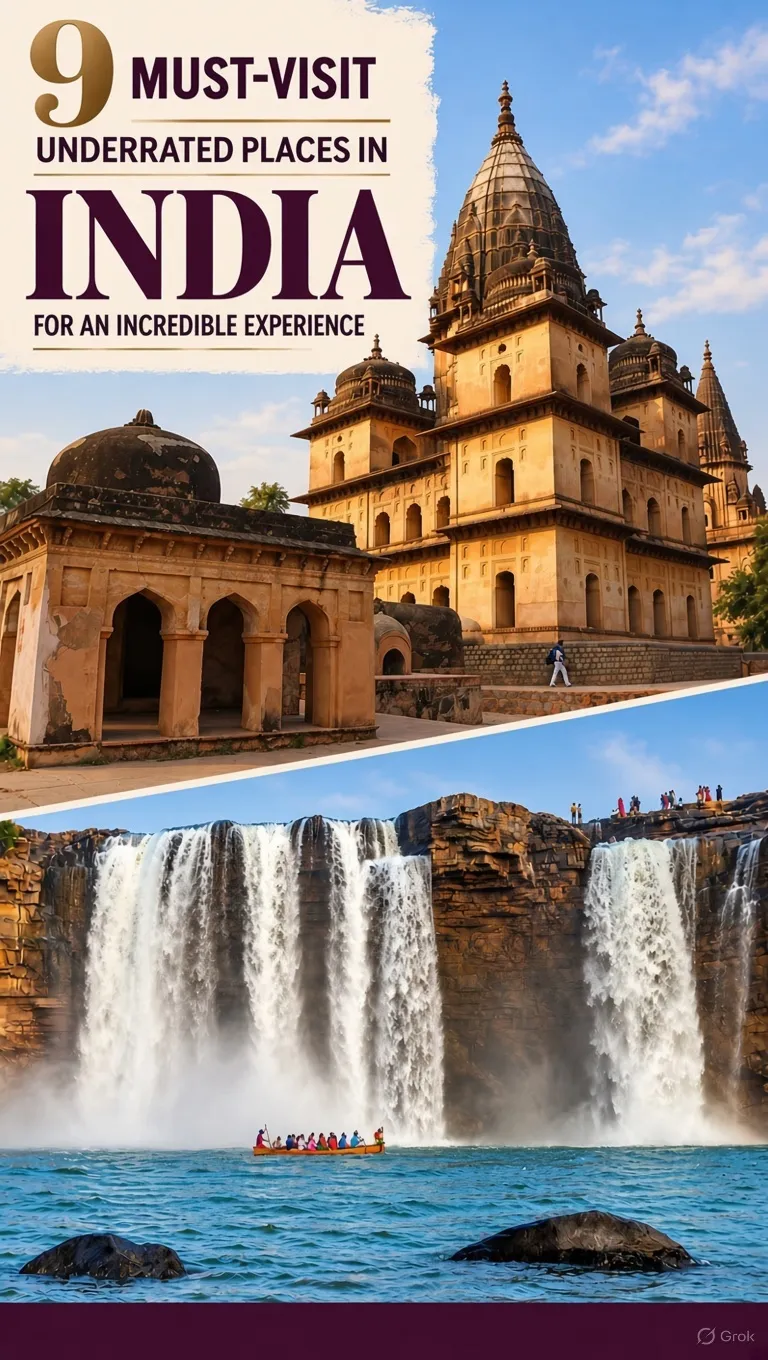
Located on the banks of the Betwa River, Orchha preserves the architectural legacy of the Bundela rulers. Palaces, temples, and cenotaphs from the 16th and 17th centuries stand in a compact historic setting that has largely escaped intensive modern development. Walking through the town and along the river reveals a strong sense of place shaped by history rather than contemporary tourism infrastructure. The combination of sandstone monuments, riverside views, and a slower local rhythm makes Orchha rewarding for travelers interested in heritage without large crowds.
Mawlynnong and the Khasi Hills, Meghalaya
In the East Khasi Hills, Mawlynnong has gained recognition for its community-led cleanliness and carefully maintained pathways, gardens, and bamboo structures. The surrounding region is also known for living root bridges—remarkable structures grown from the roots of rubber trees over many years by local communities. These bridges, along with waterfalls and forested hills, illustrate a close relationship between people and the landscape. Visitors can explore village paths, learn about Khasi matrilineal traditions, and experience a form of community stewardship that remains distinctive.
Additional Experiences Worth Seeking
Other places deepen the range of options. Hanle in Ladakh has become known as a dark-sky destination, offering exceptional conditions for observing the night sky in a high-altitude desert setting. Loktak Lake in Manipur is famous for its floating islands of vegetation, known as phumdis, which support a unique ecosystem and traditional ways of life. Remote valleys such as Zanskar continue to attract those drawn to dramatic mountain terrain and longstanding Buddhist monastic traditions.
Why These Places Matter
What unites these destinations is the opportunity to encounter living cultures and natural environments that still feel relatively unmediated by mass tourism. Travelers often return with stronger impressions of daily rhythms, local hospitality, and landscapes that change with the seasons. Many of these areas also benefit from thoughtful, lower-impact visitation that supports community-based stays and helps distribute tourism more evenly across the country.
Planning requires attention to practical details such as permits in certain northeastern and Himalayan regions, seasonal weather patterns, and realistic travel times. Homestays and smaller lodges frequently provide the most meaningful base for exploring. Approached with respect for local customs and environments, these underrated places offer some of India’s most memorable cultural and natural experiences—ones that reward curiosity and a willingness to step beyond the most familiar routes.
Read more – gloryhouseworld.com